
 by
Intermittent faults are the most expensive kind, not because the repair is costly but because the diagnosis is. A van that behaves perfectly at the garage gives a technician nothing to work with, and the usual outcome is a plausible part replaced, a bill paid, and the fault returning a fortnight later.
The single most useful thing an owner can do is gather good evidence, because you have access to something the garage does not: the fault actually occurring.
Why they are hard
Diagnosis normally means observing a fault and measuring around it. If the fault is absent, everything measures correctly, and you are left inferring from stored codes that may be days old.
Intermittent faults also tend to have causes that are intermittent by nature: a connection that makes contact until vibration breaks it, a component that works until it is hot, a wire that conducts until the loom flexes. These are precisely the causes that pass a static test.
Build a record
This is where owners add the most value, and it costs nothing but attention. Every time it happens, note:
- Date, time and outside temperature.
- How long the engine had been running, and whether it was cold, warming or fully hot.
- What you were doing. Accelerating, steady speed, idling, braking, turning, going over a bump.
- Load. Empty, part loaded, fully loaded, towing.
- Weather. Wet, dry, freezing.
- Electrical load. Headlights, heater, air conditioning, wipers.
- Exactly what happened, in your own words, and what made it stop.
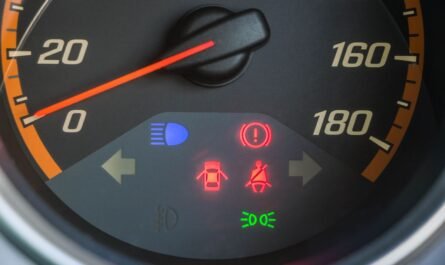
- Any warning lights, including ones that appeared briefly.
After several occurrences a pattern usually emerges, and the pattern is the diagnosis. A fault that only happens in the wet points at water ingress into a connector. One that only happens when hot points at heat-related resistance. One that only happens over bumps points at a physical connection. One that only happens with high electrical load points at charging or an earth.
Common intermittent causes by pattern
Only when wet
Water ingress into a connector, a cracked coil or sensor housing, or a chafed wire earthing against the body when damp.
Only when hot
Resistance rises with temperature, so a marginal connection or a failing component fails only when warm. Classic examples are a starter motor that will not turn after a delivery stop, a crank sensor that drops out when hot, and a relay that opens as it warms. See starter motor faults.
Only over bumps or on rough roads
A physical connection issue. Look at connectors, earth points and any loom section that flexes, particularly around doors and the engine on its mounts.
Only under load or acceleration
Fuel delivery, boost, or a component that fails only when demand is high. Also engine movement on worn mounts flexing a loom.
Only when cold
Glow plugs, battery capacity, fuel waxing, or a component whose clearances only cause trouble cold. See diesel cold start problems.
Multiple unrelated systems at once
Almost always a shared cause: low system voltage, a poor main earth, or a charging fault. Do not chase each symptom separately. See battery and charging fault testing.
Technical approaches
Freeze frame data
When a code is set, the control unit stores a snapshot of conditions at that moment: engine speed, load, coolant temperature, vehicle speed and more. For an intermittent fault this is the closest thing to having witnessed it. Always record freeze frame data before clearing anything.
Do not clear codes casually
Every clear throws away evidence. With an intermittent fault you may wait weeks for the next occurrence. Record first, and only clear when you have a specific reason, such as testing whether a repair worked.
Data logging
Choosing a tool with this capability is covered in our guide to choosing a diagnostic scan tool. Many mid-range scan tools can log live data while driving. Setting up a log of the relevant parameters and driving until the fault occurs captures exactly what happened. This is the most powerful technique available and is what a good garage will do for a genuinely elusive fault.
Wiggle testing
With live data displayed, flex and move looms and connectors while watching for the reading to drop out. Effective for physical connection faults and costs nothing but time. Target the areas that flex: door looms, the engine harness where it crosses to the body, and anything near a moving component.
Recreating the conditions
If it fails in the wet, apply water carefully to suspect areas with a spray bottle. If it fails when hot, use a heat gun cautiously on suspect components while monitoring. If it fails over bumps, tap connectors gently. These are legitimate techniques, used with care.
Voltage drop testing
Poor connections are a leading cause of intermittent electrical faults, and voltage drop testing under load finds them where a static resistance check does not.
Working with a garage
Two things make an enormous difference to cost.
Bring your written record. A technician given a clear pattern can target the diagnosis. Given only that it sometimes cuts out, they are guessing.
Agree the approach up front. Ask them to diagnose rather than replace speculatively, and be prepared to pay for diagnostic time. Paying for two hours of diagnosis is usually cheaper than paying for three parts that were not the fault.
Be wary of a sequence of speculative repairs. If a garage has replaced two components and the fault persists, the approach is not working.
Common mistakes
- Clearing codes before recording them. The most damaging thing you can do to your own diagnosis.
- Not keeping a record. The pattern is usually the answer.
- Replacing parts speculatively. Expensive and it obscures the picture.
- Chasing several symptoms separately when one voltage or earth fault causes them all.
- Ignoring a fault because it is rare. Intermittent faults become permanent.
- Not mentioning previous repairs. Recent work is a strong clue, since disturbed connectors are a common cause.
When to stop and get help
Get help if the fault affects braking, steering or the engine cutting out while driving, since these are safety issues regardless of how rarely they occur. Also seek help once you have a clear pattern but cannot isolate the cause, because data logging equipment and experience are what close out difficult cases.
Prevention
Keep earth points and connectors clean and protected. Address minor electrical faults before they become intermittent ones. Have accessories fitted properly, since poor installations are a common source. See fitting electrical accessories. Keep the battery and charging system healthy, since low voltage produces intermittent faults across a modern van.
Frequently asked questions
The garage cannot find the fault. What now?
Keep a detailed record over several occurrences and take that back. A documented pattern is often what unlocks it, and consider a garage that offers data logging.
Should I clear the code and see if it comes back?
Only after recording the code and freeze frame data. Otherwise you are discarding the evidence.
Why do several warning lights come on together?
Usually one shared cause, most often low voltage or a poor earth, rather than several independent failures.
Is it worth replacing a suspect part to see?
Occasionally, where the part is cheap and strongly implicated. As a general approach it is expensive and rarely resolves intermittent faults.
This guide is general information for UK van owners, not vehicle-specific repair instructions. Procedures, tolerances and component layouts vary by engine code and model year. Confirm any figures against your VIN and manufacturer workshop information, and see our Disclaimer before carrying out any work.