 by
Trackers, dashcams, beacons, inverters, interior lighting, reversing cameras and racking power all get added to working vans, frequently in a hurry and frequently badly. The consequences show up later as flat batteries, intermittent faults that defy diagnosis, and in the worst cases fires. Doing it properly is not much harder than doing it badly.
Why it matters more on a modern van
An older vehicle tolerated rough wiring. A modern van does not, for two reasons. First, control modules communicate over data networks, and splicing into the wrong wire can disrupt communication in ways that produce faults nowhere near the accessory. Second, modules go to sleep after the van is locked, and an accessory that keeps drawing current prevents that or simply drains the battery overnight.
Safety notes
Disconnect the battery negative terminal first and reconnect it last where a job requires isolation. Batteries give off hydrogen and can explode if ignited, so keep sparks and flames away, and wear eye protection as battery acid causes burns.
Disconnecting the battery on a modern van can lose stored settings and may require relearn procedures afterwards. Never bypass a fuse with a higher rated one or with wire, as fuses protect against fire.
The three questions to answer before you start
1. Where does the power come from?
- Permanent live stays on with the ignition off. Necessary for alarms, trackers and parking-mode dashcams, and the source of most drain problems.
- Ignition live is on only with the ignition. Right for most accessories, because it cannot drain the battery when parked.
- Auxiliary battery is the correct answer for anything with meaningful continuous draw, such as a fridge or significant lighting, so the starter battery is never at risk.
The single most useful decision you can make is to use an ignition live wherever the accessory does not genuinely need to work when parked.
2. How is it fused?
Every added circuit needs its own fuse, sized to protect the cable, and fitted as close to the power source as practical. The fuse protects the wire, not the accessory. An unfused feed from a permanent live is how a chafed wire becomes a fire.
Fuse taps that piggyback an existing fuse are convenient and are acceptable for genuinely small loads, provided you use one with its own fuse for the new circuit and do not exceed what the original circuit and its wiring were designed for. They are not appropriate for anything drawing significant current.
3. What is the earth?
Use a proper earth point on the body or an existing earth stud, cleaned to bare metal. Do not simply screw a self-tapper into whatever panel is nearest, which may be painted, may not be well bonded, and may puncture something behind it. A poor accessory earth produces intermittent faults that are extremely difficult to trace later.
How accessories cause parasitic drain
A van left for a weekend with a small continuous draw can be flat by Monday. Common offenders are trackers, dashcams in parking mode, aftermarket alarms, poorly fitted radios that never power down, and inverters left switched on.
The other pattern worth knowing is an accessory that prevents modules going to sleep. The draw itself may be tiny, but by keeping the network awake it stops the van entering its low-power state, and the total drain is far higher than the accessory alone. This produces the frustrating case where the accessory measures as almost nothing but the battery still goes flat.
If you have a drain, disconnecting recently added accessories one at a time is the fastest route to the answer. See parasitic drain testing.
Doing it properly
- Use correctly sized cable for the current and the length of run. Undersized cable overheats and causes voltage drop.
- Fuse close to the source. Within a short distance of where the feed is taken.
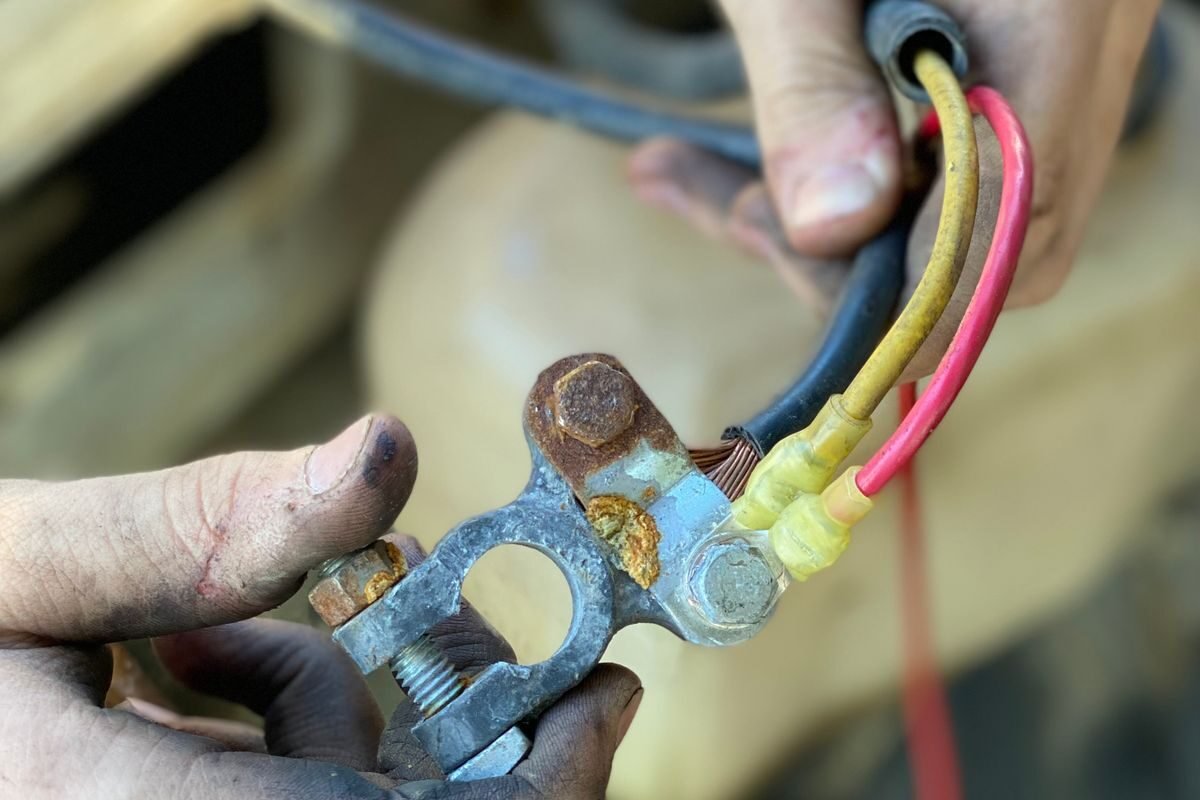
- Use proper connectors. Soldered and heat-shrunk, or quality crimps with the correct tool. Avoid the insulation-displacement connectors that clamp over a wire and cut into it, as they promote corrosion and are a frequent source of later faults.
- Route away from heat and moving parts, using existing loom paths and grommets where possible. Never drill through a panel without checking both sides, and always fit a grommet where a cable passes through metal.
- Secure the cable so it cannot chafe. Vibration plus an unsecured wire equals a short circuit eventually.
- Consider a relay for anything drawing meaningful current, so the switch handles only a small trigger current.
- Label what you added, and keep a note. Whoever diagnoses the van in three years will thank you, and it may be you.
Racking, beacons and heavier installations
Interior racking lighting, beacons, tail lifts and inverters draw considerably more current than a dashcam, and deserve a properly designed circuit rather than a spliced feed. Anything above modest current should generally come from its own fused supply, ideally with a relay, and for continuous loads from a leisure or auxiliary battery with a split charge arrangement.
If the van is used commercially and the installation affects lighting or braking, such as a beacon or a tow electrics kit, it needs doing to a proper standard. A badly wired trailer socket is a common source of both lighting faults and drains.
Indicative UK costs
Broad context only. Fused leads, connectors and cable are inexpensive. Professional fitting of a tracker or dashcam is usually a modest charge and often worth it. An auxiliary battery and split charge system runs into the low-to-mid hundreds depending on specification. Against that, diagnosing an obscure electrical fault caused by a bad installation can easily cost more than having it done properly. Get quotes.
Common mistakes
- Taking a permanent live when an ignition live would do. The root of most drain problems.
- No fuse, or a fuse too far from the source. The most serious mistake, and a genuine fire risk.
- Using insulation-displacement connectors. Convenient, unreliable, and a common cause of later faults.
- Self-tapping into a painted panel for an earth. Produces intermittent faults and can damage what is behind it.
- Splicing into a data network wire. Can cause faults across unrelated systems.
- Leaving cable unsecured. Vibration and chafing lead to shorts.
- Not telling the next person. Undocumented modifications make future diagnosis expensive.
When to get it done professionally
Anything drawing significant current, anything connected to the vehicle data network, anything affecting lighting or braking such as tow electrics, and any installation requiring an auxiliary battery. Also get help if you have added something and now have unexplained electrical faults, because working backwards from a bad installation is genuinely difficult.
Prevention
Plan the circuit before you buy anything. Use ignition live where possible. Fuse everything. Keep a record of what was added and where the feeds were taken. If the van goes to a garage, tell them what has been fitted, as it saves diagnostic time and money.
Frequently asked questions
Can I use a fuse tap from the fuse box?
For small loads, yes, using a tap with its own fuse for the new circuit and staying within what the original circuit was designed for. Not for heavy loads.
My tracker keeps flattening the battery. Is it faulty?
Possibly, but more often it is drawing more than expected or preventing the van modules from going to sleep. Have the actual drain measured.
Do I need an auxiliary battery?
If you run anything with meaningful continuous draw while parked, yes. It keeps the starter battery protected.
Will added accessories affect my warranty?
A badly fitted accessory that causes damage can certainly complicate a claim. Professional installation and documentation help considerably.
This guide is general information for UK van owners, not vehicle-specific repair instructions. Procedures, tolerances and component layouts vary by engine code and model year. Confirm any figures against your VIN and manufacturer workshop information, and see our Disclaimer before carrying out any work.