
 by
Head gasket failure is the diagnosis van owners fear and, partly for that reason, the one that gets reached for too quickly. Several much cheaper faults produce almost identical symptoms. Before accepting a four-figure quote, it is worth understanding what actually confirms a head gasket failure and what merely suggests one.
What the head gasket does
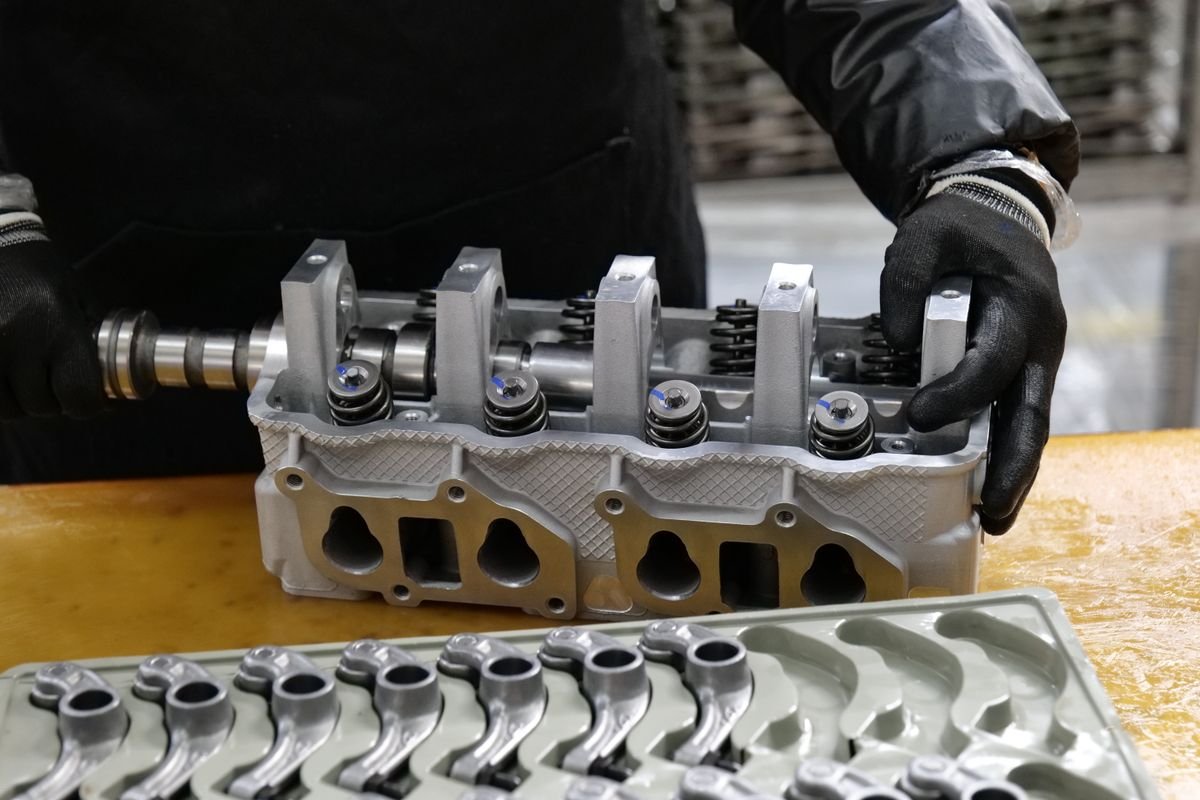
The gasket seals the joint between the cylinder head and the engine block. It has to contain combustion pressure in each cylinder while simultaneously keeping coolant and oil passages separate from each other and from the cylinders. When it fails, one or more of those separations is breached, and the symptoms depend entirely on which.
- Combustion into coolant. Pressurises the cooling system, causes overheating and bubbling.
- Coolant into a cylinder. White exhaust vapour, coolant loss, sometimes a misfire.
- Coolant into oil. Emulsified oil, rising oil level.
- Compression between cylinders. Poor running, low power, uneven compression.
- External leak. Oil or coolant weeping from the head-to-block joint.
Safety notes before you start
Coolant is hot and under pressure when the engine is warm. Never open the expansion tank cap or slacken a hose on a hot engine, as escaping steam and coolant can cause severe scalding. Let the system cool fully first.
If you need to run the engine to check the fan or watch temperature, keep hands, tools and clothing clear of the cooling fan and auxiliary belt. A fan can start without warning even with the ignition off on some vehicles. Apply the parking brake, chock the wheels and do not work under a van supported only by a jack.
The symptoms, and what else causes them
This is the part that saves money. Every classic head gasket symptom has cheaper impostors.
White smoke from the exhaust
Also caused by: Cold-morning condensation, which is completely normal and clears within a few minutes. A leaking EGR cooler, which puts coolant into the exhaust stream with no gasket fault at all. On some engines, a failed injector causing incomplete combustion.
What distinguishes it: Head gasket white smoke is persistent once the engine is fully warm, is often sweet smelling, and comes with measurable coolant loss.
Mayonnaise under the oil filler cap
Also caused by: Short-journey use. This is extremely common. A van that only does a few miles at a time never gets the oil hot enough to drive off condensation, and pale emulsion collects on the coolest surfaces, typically the filler cap and rocker cover.
What distinguishes it: Genuine gasket failure produces emulsion on the dipstick and throughout the oil, not just on the cap, and the oil level usually rises.
Overheating
Also caused by: Thermostat, water pump, radiator blockage, failed fan, faulty pressure cap, air lock. All far more common and far cheaper. See our guide to diagnosing overheating in the right order and to separating thermostat from water pump faults.
Coolant loss with no leak
Also caused by: A hot-side external leak that evaporates, a leaking heater matrix inside the cab, a failing pressure cap, or an EGR or oil cooler leak. Covered fully in our guide to coolant loss with no visible leak.
Bubbles in the expansion tank
Also caused by: Air still in the system after recent cooling work that has not been bled correctly. This catches people out regularly.
What distinguishes it: Air from incomplete bleeding diminishes over a few heat cycles. Combustion gas entry continues indefinitely and often increases when the engine is revved.
Loss of power and rough running
Also caused by: Injectors, turbo faults, blocked DPF, EGR problems, air leaks. On a diesel van these are all considerably more likely than a head gasket.
Tests that actually confirm it
Combustion gas block test
The most accessible meaningful test. A kit draws vapour from the expansion tank through a chemical fluid that changes colour in the presence of combustion gases. Follow the instructions exactly, particularly on coolant level, because drawing liquid coolant into the tester ruins the result.
Positive: Strong evidence of combustion gas entering the coolant. Note this does not distinguish a head gasket from a cracked head or, in some cases, a failed EGR cooler.
Negative: Useful but not conclusive. A leak that only opens under load and heat may not show at idle. Repeat warm and under light load if suspicion remains.
Cylinder compression test
Measures the pressure each cylinder generates. Two adjacent cylinders reading significantly low together is a classic pattern for a gasket breached between them.
Limitation: Low compression also results from worn rings, valve problems or timing issues, so it locates a problem rather than naming its cause.
Cylinder leak-down test
More informative than a compression test. Compressed air is fed into each cylinder at top dead centre and you listen for where it escapes. Bubbling in the expansion tank while testing a cylinder is direct evidence of a breach into the coolant, which is about as clear as this gets without dismantling.
Cooling system pressure test
Pressure that falls with no external leak, combined with a positive block test, builds a strong case. Pressure that rises rapidly when the engine is started and revved suggests combustion pressure entering the system.
Oil and coolant inspection
Coolant in the oil, oil in the coolant, or both, alongside other evidence, supports the diagnosis. On its own, a trace of emulsion is weak evidence for the reasons given above.
Tools required
- Combustion gas block test kit.
- Cooling system pressure tester.
- Compression tester with the correct adaptor for diesel glow plug or injector ports.
- Leak-down tester and a compressed air supply.
- Scan tool for live data and stored codes.
Diesel compression testing needs care. Access to glow plug or injector ports varies significantly and disturbing injectors on a common rail engine brings its own risks, including damaged seals and fuel leaks. If you are not confident, this is a reasonable point to hand over to a garage.
Common mistakes
- Diagnosing from one symptom. No single sign confirms a head gasket. Build a case from several.
- Panicking about filler cap mayonnaise. Check the dipstick before assuming the worst.
- Skipping cheaper causes. Rule out the pressure cap, thermostat, fan and EGR cooler first. They are vastly more common.
- Using head gasket sealant products. They occasionally buy time on a very minor breach, but frequently block the radiator, heater matrix and coolant passages, making the eventual proper repair harder and more expensive. If the van is going to be repaired, do not use them.
- Not investigating why it failed. Head gaskets rarely fail without a reason. If the cause was overheating from a failed thermostat, replacing the gasket alone means it will happen again.
Repair options and indicative costs
Head gasket replacement is a major job. The head has to come off, which usually means removing timing components, and the head itself should be checked for flatness and cracks by a machine shop. Head bolts are typically single use. Broad UK context is well over a thousand pounds and frequently considerably more depending on engine and access, so obtain firm quotes.
Before committing, weigh the cost against the van value, its overall condition, mileage, service history and whether other major work is due. On an older high-mileage van, a repair costing a large fraction of its value deserves careful thought.
If a cracked cylinder head is found rather than just a failed gasket, the cost increases again, as the head needs repair or replacement.
When to stop and get help
Stop driving as soon as you suspect this. Continuing to run an engine with combustion gases in the coolant, or coolant in the oil, causes rapidly escalating damage including bearing failure and head warping.
Get professional diagnosis before authorising the repair. A garage should be able to show you the evidence, whether that is a block test result, a leak-down test or compression figures. Be wary of a head gasket diagnosis offered on symptoms alone with no confirming test.
Prevention
Most head gasket failures on modern diesels follow an overheating event, so the practical prevention is to take cooling faults seriously and fix them early. Keep coolant fresh and at the correct specification, address small leaks promptly, and never keep driving a van whose temperature gauge is rising.
Quick reference
Difficulty: The tests described above (chemical block test, pressure test) are within reach of a confident owner with the right kit. The repair itself — a full head removal and rebuild — is a major job requiring specialist tools, correct procedure and often machine work, and is a garage job for almost all owners. Related fault codes: there is no single fault code for a head gasket failure. It typically shows up indirectly through misfire codes (P0300 series), coolant temperature sensor codes, or codes for the mimicking faults covered above, rather than a code that names the gasket directly.
Post-repair checks
After a head gasket repair, the cooling system needs to be bled correctly to remove trapped air, which can otherwise cause overheating that looks like the original fault recurring. Pressure test the system once refilled to confirm there is no leak at the new gasket or disturbed fittings. Monitor coolant level and temperature closely over the following week and several full heat-cool cycles, since a genuine repeat failure or a fitting error tends to show up in that window rather than immediately.
Frequently asked questions
Can I drive a short distance with a failed head gasket?
It is a bad idea. Coolant loss accelerates, overheating worsens and coolant entering the oil destroys bearing surfaces quickly. Recover the vehicle rather than driving it.
Do sealant products work?
Occasionally, briefly, on very minor breaches. They also frequently cause blockages elsewhere in the cooling system. If a proper repair is planned, avoid them.
Why did it fail?
Usually overheating, sometimes pre-existing coolant loss, occasionally poor previous repair work or incorrect head bolt torque. Identifying the cause matters, because otherwise the new gasket faces the same conditions.
Could it just be the EGR cooler?
Genuinely possible, and worth checking before authorising head work. An EGR cooler leak can produce white exhaust vapour and coolant loss while the head gasket is perfectly sound, and it is a far smaller job.

3 thoughts on “Head Gasket Symptoms on a Diesel Van (and What Mimics Them)”