 by
Coolant gets treated as antifreeze, which undersells what it does and explains why it gets topped up carelessly. Freeze protection is only one of its jobs, and arguably not the most important one for a van that spends its life in a British climate.
What coolant actually does
- Transfers heat from the engine to the radiator.
- Lowers the freezing point, preventing the expansion that cracks blocks and heads.
- Raises the boiling point, working with system pressure to stop localised boiling around hot spots.
- Inhibits corrosion, protecting the mix of aluminium, iron, steel, copper, brass, solder and rubber inside a cooling system.
- Lubricates the water pump seal.
The corrosion inhibitor package is the part that degrades, and it is the reason coolant has a replacement interval. A cooling system contains several dissimilar metals in contact with a liquid, which is essentially a recipe for galvanic corrosion unless something is actively preventing it.
Safety notes
Coolant is hot and under pressure when the engine is warm. Never open the expansion tank cap or slacken a hose on a hot engine, as escaping steam and coolant can cause severe scalding. Let the system cool fully first.
Keep clear of the cooling fan, which can start without warning even with the ignition off on some vehicles. Coolant is toxic and must be cleaned up and disposed of properly, as its taste attracts animals.
The main coolant technologies
Coolants are broadly grouped by the chemistry of their inhibitor package rather than by colour.
- IAT, inorganic additive technology. The traditional type, typically using silicates and phosphates. Protects well but depletes relatively quickly, so it has shorter intervals. Usually associated with older vehicles.
- OAT, organic acid technology. Uses organic acid inhibitors, lasts considerably longer, and is common on modern vehicles. Generally silicate-free.
- HOAT, hybrid organic acid technology. Combines organic acids with some silicates, used by a number of manufacturers.
- Si-OAT and other variants, which manufacturers specify for particular engines.
Why colour is not a reliable guide
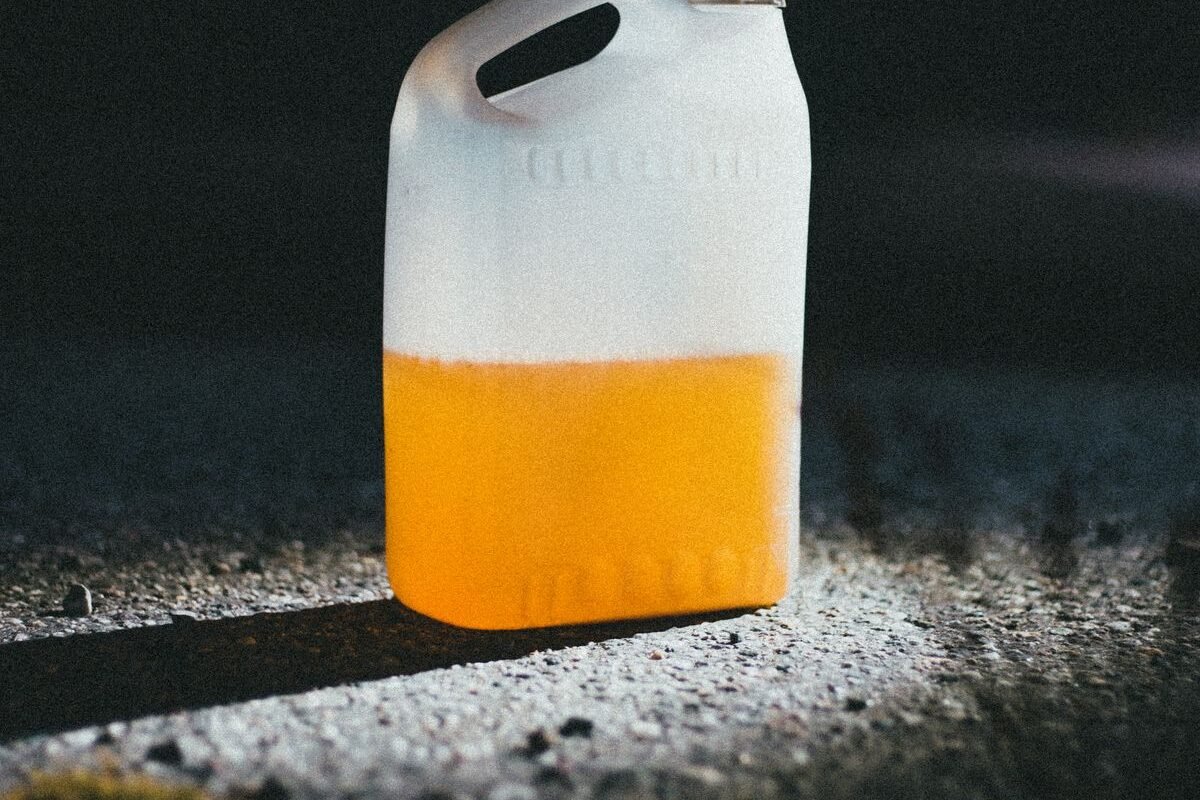
This is the single most useful thing to understand. Coolant colour comes from dye, and dye is not standardised across the industry. Two coolants of the same colour can have entirely different chemistry, and the same chemistry is sold in different colours by different suppliers.
Buying by colour to match what is in the expansion tank is therefore not a safe method. What matters is the manufacturer specification for your engine, which is normally quoted as a specific approval or standard rather than a colour.
Find that specification in the handbook, or from a franchised dealer using your VIN. Then buy a coolant that explicitly states it meets that approval.
What happens when incompatible types are mixed
Mixing coolants with incompatible inhibitor chemistry can cause the additives to react. In practice this shows up as:
- Gelling or sludging, where the mixture thickens and forms deposits that block the radiator, heater matrix and narrow passages. This is the outcome people mean when they warn about mixing, and it can be expensive.
- Loss of corrosion protection, because the additive packages neutralise each other and neither works properly.
- Accelerated corrosion, particularly of aluminium components.
- Water pump seal wear.
The practical rule: if you do not know what is in the system, the safe course is to drain, flush and refill with the correct specification rather than topping up with something that may or may not be compatible.
The water problem
Topping up with plain water is the most common cooling system mistake, and it is worth being clear about the consequences.
In a genuine roadside emergency, water will get you home and that is the right call. As a habit, it does three things: it dilutes the corrosion inhibitors so protection falls below the intended level, it lowers freeze protection, and if tap water is used, it introduces minerals that scale up inside the system.
A van that has been topped up with water repeatedly over years typically has rusty brown coolant, a partially blocked heater matrix, and a water pump that will not last. If your coolant looks brown or rusty rather than its intended colour, that is what you are looking at.
Where water is needed for dilution of a concentrate, deionised or distilled water is preferable to tap water for exactly this reason.
Concentrate versus ready-mixed
Coolant is sold both ways. Ready-mixed is convenient and removes the risk of getting the ratio wrong. Concentrate is cheaper per litre but must be diluted correctly, typically around half and half, though you should follow the specific product instruction.
Two errors to avoid: using concentrate undiluted, which actually reduces heat transfer and can cause overheating, and over-diluting, which reduces both freeze protection and corrosion protection.
Checking condition
- Colour and clarity. Should look like the coolant that went in. Brown, rusty or cloudy indicates contamination or depletion.
- Oily film or emulsion. Suggests oil ingress, which points at a head gasket or oil cooler. See head gasket symptoms.
- Debris or particles. Indicates internal corrosion.
- Freeze protection, testable with an inexpensive refractometer or hydrometer.
- Inhibitor condition, which test strips can indicate. This is the part that matters most and the part nobody checks.
Note that adequate freeze protection does not mean the inhibitors are still working. Coolant can pass a freeze test while offering little corrosion protection, which is exactly why replacement is interval-based.
Changing it
Follow the manufacturer interval and specification. A proper change means draining, flushing where the old coolant is degraded or contaminated, refilling with the correct product and, critically, bleeding the system properly. Many vans have specific bleed points and a required procedure, and air left in the system causes overheating and a cold heater. See van heater blowing cold.
Dispose of old coolant properly. It is toxic, and its sweet taste is genuinely attractive to animals. Take it to a household waste recycling centre rather than pouring it away.
Indicative UK costs
Broad context only. Coolant itself is inexpensive, typically ten to thirty pounds for enough to fill a van system. A coolant change at a garage is usually a modest labour charge. Against that, a blocked heater matrix caused by sludging means dashboard removal on most vans, and a corroded radiator or failed water pump both run into the hundreds. Get quotes.
Common mistakes
- Matching by colour. Dye is not standardised and tells you nothing reliable about chemistry.
- Topping up with tap water habitually. Dilutes protection and introduces scale.
- Mixing incompatible types. Risks gelling and loss of protection.
- Treating it as lifetime fill. Inhibitors deplete even if the coolant looks fine.
- Using concentrate undiluted. Reduces heat transfer.
- Not bleeding after a change. Causes overheating and a cold heater.
- Using stop-leak as maintenance. Blocks matrices and radiators.
When to get help
Get help if the coolant is contaminated with oil, if the system has been mixed and you are unsure what is in it, or if there is evidence of sludging. A thorough flush and refill is worth paying for in those cases, because the alternative is progressive damage you cannot see.
Prevention
Change coolant at the specified interval with the specified product. Keep a note of what was used and when. Top up with the same specification, and keep a small bottle of the correct coolant in the van rather than relying on water. Address leaks promptly rather than repeatedly topping up. Have condition checked at service.
Frequently asked questions
Can I mix different coolant colours?
Colour is not the question, chemistry is. Two identical colours can be incompatible. If you do not know what is in there, drain and refill with the correct specification.
Is topping up with water acceptable?
In a roadside emergency, yes, to get home. As a habit it dilutes corrosion protection and, with tap water, adds scale.
How do I find the right specification?
The handbook, or a franchised dealer using your VIN. Look for a stated approval or standard rather than a colour.
My coolant is brown. What does that mean?
Usually corrosion, typically from long-term water top-ups or coolant that is well past its interval. It should be drained, flushed and refilled properly.
This guide is general information for UK van owners, not vehicle-specific repair instructions. Procedures, tolerances and component layouts vary by engine code and model year. Confirm any figures against your VIN and manufacturer workshop information, and see our Disclaimer before carrying out any work.