 by
A Transit Custom that suddenly loses power, whistles under acceleration or throws a boost code is often diagnosed with a failed turbo. Sometimes that is right. More often, the turbo is fine and something around it has failed. This guide covers the most common Transit Custom turbo problems, how to tell a real turbo failure from a boost leak, and why turbos fail in the first place.
The turbo setup on a Transit Custom
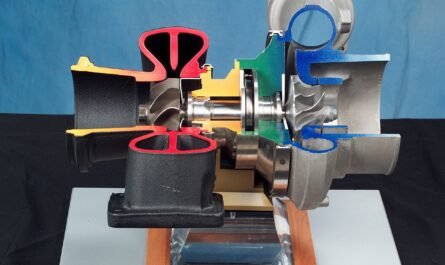
Both the 2.2 TDCi and the 2.0 EcoBlue in the Transit Custom use a variable geometry turbocharger. Moveable vanes inside the turbine housing change angle to give good boost at low revs and avoid overboost at high revs. The vanes are moved by an actuator controlled by the engine computer. Compressed air passes through hoses and the front-mounted intercooler before entering the engine.
Every part of that chain can cause turbo-like symptoms.
Common symptoms
- Loss of power, especially under load or on hills.
- Limp mode with an engine warning light.
- A whistle, whoosh or siren-like noise that rises with revs.
- Blue or grey smoke from the exhaust, or oil in the intercooler hoses.
- Codes such as P0299 (underboost), P0234 (overboost) or P2263 (boost system performance).
Cause 1: split intercooler hoses
The most common cause of underboost on the Custom. Rubber hoses fail at bends and where they are clamped, and the plastic pipe sections can crack. Look for oil mist around joins, hoses that look swollen or perished, and loose clips. A whoosh under acceleration is a strong clue.
Cause 2: cracked or damaged intercooler
The intercooler sits low at the front of the van, where it takes stone strikes and kerb knocks. Cracks around the end tanks leak boost. Oil on the bottom of the intercooler is a hint, but some oil is normal from the crankcase breather, so a smoke test is the best confirmation.
Cause 3: sticking vanes or actuator faults
Soot from lots of short journeys and EGR activity can stick the vanes. If they stick open, the van feels flat at low revs. If they stick closed, it can overboost and drop into limp mode. Actuators can also fail electrically. A scan tool with actuator tests lets you command the vanes and watch the response. Regular longer runs help keep the vanes free.
Cause 4: boost pressure sensor or wiring
A faulty boost (MAP) sensor reports the wrong pressure and the computer reacts accordingly. Comparing the sensor reading with key on, engine off, against barometric pressure is a simple first check.
Cause 5: genuine turbo failure
A turbo has truly failed when there is shaft play, the compressor or turbine wheel is damaged, or it is leaking oil through its seals. Signs include:
- Noticeable side-to-side play in the compressor shaft with the inlet hose removed. A small amount of end float is normal, but the wheel should not touch the housing.
- Rub marks or damaged blades on the compressor wheel.
- Heavy oil in the intake and intercooler, combined with blue smoke.
- A loud siren or grinding noise.
Why turbos fail on the Custom
Turbos rarely die of old age. The usual causes are:
- Oil starvation. Low oil level, a blocked oil feed pipe or, on the 2.0 EcoBlue, low oil pressure from oil pump belt problems. See our guide to the 2.0 EcoBlue oil pump belt.
- Dirty oil. Extended oil changes leave sludge that wears the bearings.
- Foreign objects. A damaged air filter or debris left in the intake during previous work.
- Blocked oil return or high crankcase pressure. Forces oil past the seals.
- Hot shutdowns. Switching off immediately after hard driving can cook the oil in the turbo bearings.
If the cause is not fixed, a new turbo will fail too. Always replace the oil feed pipe, change the oil and filter, and clean the intercooler of oil when fitting a replacement.
Diagnosis checklist
- Read codes and freeze frame data.
- Inspect all intercooler hoses, pipes and clips.
- Smoke test the intake system.
- Compare requested and actual boost on a road test.
- Run the turbo actuator test.
- Check oil level, condition and service history.
- Inspect the turbo for shaft play and wheel damage.
Our general guide to van turbo problems and our article on Ford Transit limp mode go into more detail on boost-related faults.
Frequently asked questions
How much does a Transit Custom turbo cost to replace?
Costs vary with new, reconditioned or genuine parts and labour rates. Always budget for the oil feed pipe, gaskets and an oil change as well.
Can I drive with a whistling turbo?
A whistle from a boost leak is not immediately dangerous, but it can lead to limp mode and higher soot levels. A grinding or siren noise could mean imminent turbo failure, which can send debris into the engine. Get it checked promptly.
Should I let the engine idle before switching off?
After hard driving or towing, letting it idle for 30 seconds to a minute helps the turbo cool down.
General owner guidance. Always follow Ford workshop information for turbo replacement on your engine.
Vehicle-specific reference and safe use
Match the VIN, engine code, build date and drivetrain before applying a procedure. The references below provide vehicle instructions or technical background; they do not establish that a particular component has failed on your van.