 by
Constant velocity joints allow a driven wheel to be steered and to move up and down with the suspension while still receiving drive. They are robust and often last the life of the van, with one significant caveat: they depend entirely on a rubber boot keeping grease in and grit out. Almost every CV joint failure starts with a split boot that nobody noticed.
Applicability
Front-wheel-drive vans have driveshafts with an inner and outer CV joint on each side. Rear-wheel-drive vans such as the larger Sprinter and Transit variants use a propshaft with universal joints and a centre bearing instead, which fails differently. Confirm which layout you have.
Safety notes
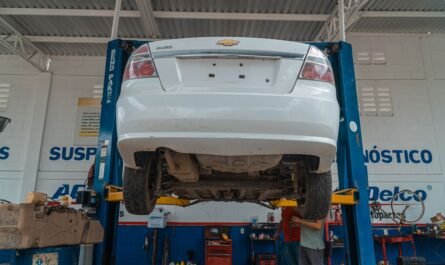
Never work under a van supported only by a jack. Use axle stands rated for the weight at the manufacturer support points, on firm level ground, with the parking brake applied and the wheels chocked. Wear eye protection when working underneath, as corrosion debris falls.
Suspension components can store considerable energy. Coil springs in particular must never be disturbed without proper spring compressors, and even then the job carries real risk. If you are not equipped for it, this is a job for a garage.
Symptoms and what they point to
Clicking or knocking on full lock
The classic outer CV joint symptom. Most noticeable manoeuvring slowly on full steering lock, such as pulling out of a parking space, and typically louder on the side that is loaded. A rhythmic click that speeds up as the wheel turns faster.
Vibration under acceleration
More often the inner joint, or a bent shaft. A vibration that appears under power and eases when you lift off suggests the inner joint rather than the outer.
Clunk when taking up drive
A single clunk pulling away or when changing between forward and reverse. Can be a worn joint, but also commonly worn engine or gearbox mounts, or on rear-wheel drive a worn universal joint. Do not assume the driveshaft.
Grease sprayed around the inside of the wheel arch
The most valuable early sign and the one worth actively looking for. A split boot flings grease outward as the shaft rotates. Finding this before the joint runs dry turns an expensive repair into a cheap one.
Vibration at a specific speed
On rear-wheel-drive vans, a propshaft imbalance or a failing centre bearing typically produces vibration within a narrow speed band.
Diagnostic sequence
1. Inspect the boots first
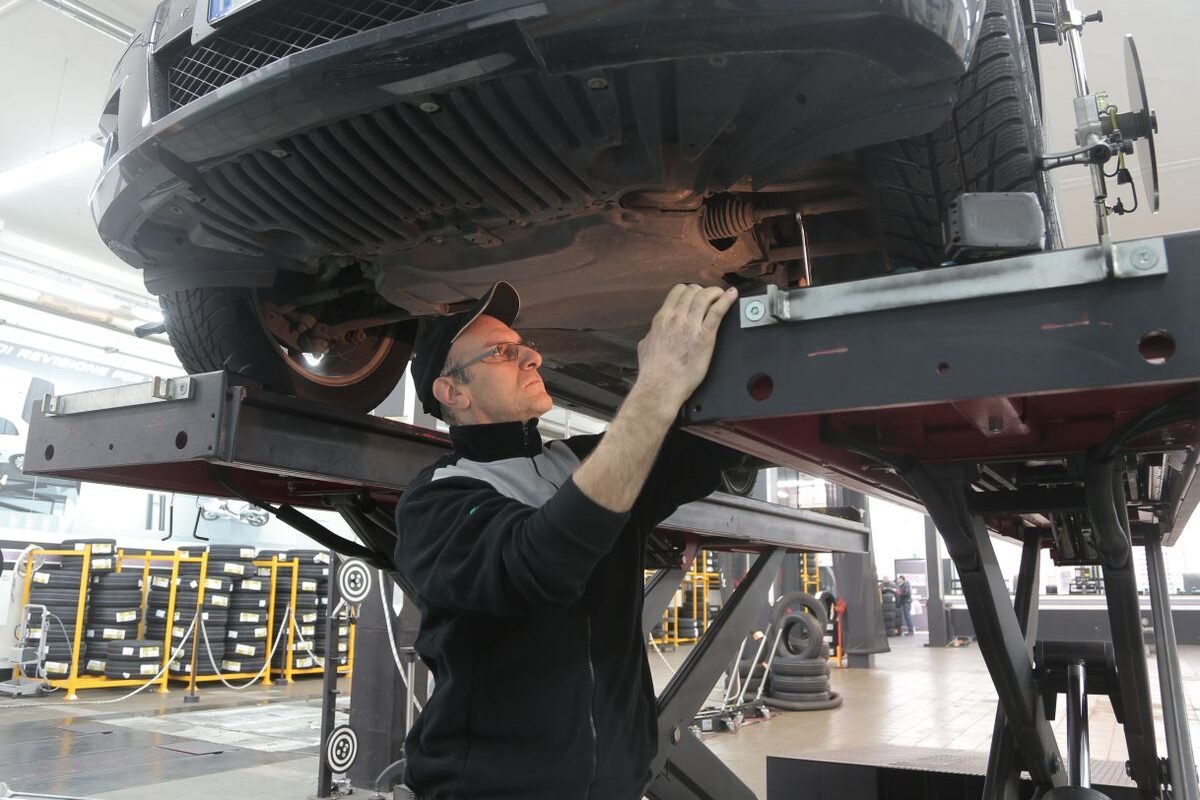
Check: With the van safely supported, examine the rubber boots at both ends of each driveshaft. Turn the steering to full lock to expose the outer boot fully. Look for splits, cracks, missing clips and grease residue.
Result and next action: A split boot found before the joint has been contaminated means a boot replacement and repack, which is far cheaper than a driveshaft. A split boot on a joint that already clicks means the damage is done.
2. Reproduce the noise deliberately
Check: In a large empty space, drive slowly in a tight circle on full lock, first one way then the other, with the windows down.
Result and next action: Clicking that appears on left lock generally implicates the right-hand outer joint, and the reverse for right lock, because the outer joint on the loaded side is working hardest. Repeat both directions to confirm.
3. Check for play in the joint
Check: With the wheel raised, hold the shaft and try to rotate it back and forth against the hub.
Next action: Noticeable rotational play indicates wear. Compare with the other side for a reference.
4. Separate it from other causes
Check: Rule out wheel bearings, which drone rather than click, and binding brakes, which produce heat. See wheel bearing diagnosis.
Next action: A clicking that only happens on lock is characteristic of a CV joint and is rarely anything else.
5. On rear-wheel drive, check the propshaft
Check: Universal joints for play, and the centre bearing rubber for perishing and collapse.
Next action: A worn centre bearing produces vibration and a rumble; worn universal joints produce clunks on drive take-up.
Repair options
- Boot replacement only. Correct where the boot has split but the joint is still quiet and smooth. The joint is cleaned, repacked with the correct grease and a new boot fitted. Considerably cheaper than a shaft.
- Individual joint replacement. Possible on some vans, though on many the economics favour a complete shaft.
- Complete driveshaft replacement. Common approach on modern vans, often using a reconditioned exchange shaft. Frequently no more expensive than replacing a joint once labour is counted.
Note that split boots are also an MOT item, so a torn boot is worth dealing with before the test regardless of whether the joint is noisy. See common van MOT failures.
Indicative UK costs
Broad context only. A boot kit is inexpensive, with the cost being mostly labour, and it is one of the better-value preventive repairs on a van. A complete driveshaft commonly runs from around a hundred pounds into the low hundreds for the part, plus fitting. Propshaft centre bearings and universal joints vary widely. Get quotes.
Common mistakes
- Not inspecting boots at service intervals. This single check prevents most CV joint failures.
- Fitting a boot to a joint that already clicks. The grit is already in there and the joint will fail regardless.
- Assuming every clunk is a driveshaft. Engine and gearbox mounts produce very similar clunks on drive take-up.
- Using the wrong grease. CV joints need a specific molybdenum-based grease, supplied with a proper boot kit.
- Reusing the hub nut. Usually single use and torque critical.
- Ignoring a torn boot because it is quiet. It will not stay quiet.
When to stop and get help
Get it looked at promptly if clicking has become loud, if there is vibration under power, or if you find significant play. A driveshaft that fails completely leaves the van without drive and can cause further damage. Also seek help if a propshaft centre bearing is collapsing, as a failing propshaft on a rear-wheel-drive van is a serious matter.
Prevention
Inspect the boots at every service and after any kerb strike. Avoid holding full lock for extended periods, particularly under power, since this loads the outer joints hardest. Replace a split boot immediately rather than waiting to see whether it becomes noisy.
Frequently asked questions
How long can I drive with a clicking CV joint?
It will usually continue for a while, but it is deteriorating and can eventually fail completely. Treat it as a repair to book rather than one to defer indefinitely.
Is a split boot an MOT failure?
A torn or insecure boot is an MOT item, so yes, it is worth dealing with before the test.
Should I replace both driveshafts?
Not automatically. Unlike brakes, driveshafts do not need replacing in pairs. Replace the faulty one and inspect the other.
Why does it only click one way?
Because the outer joint on the loaded side works hardest at full lock. Which direction it clicks in usually tells you which side is worn.
This guide is general information for UK van owners, not vehicle-specific repair instructions. Procedures, tolerances and component layouts vary by engine code and model year. Confirm any figures against your VIN and manufacturer workshop information, and see our Disclaimer before carrying out any work.