 by
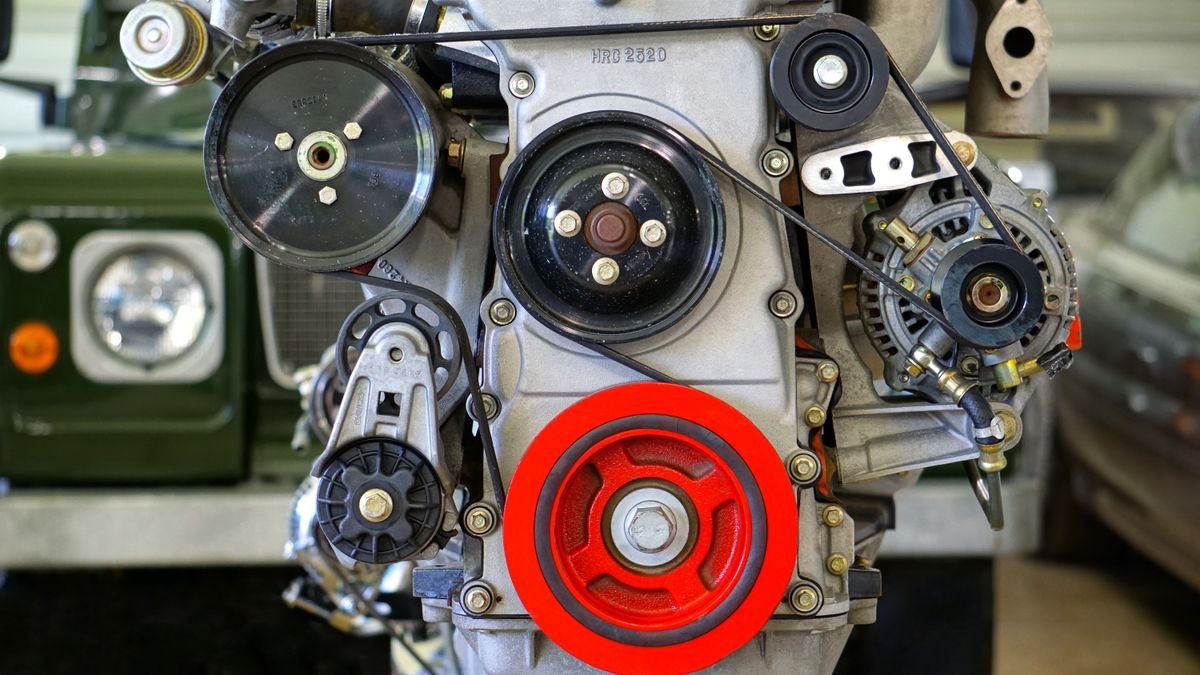
The auxiliary belt, also called the serpentine or accessory drive belt, is a single belt driving several critical components. On most vans that includes the alternator and usually the water pump and power steering pump, plus the air conditioning compressor where fitted.
The significance of that arrangement is what happens when it fails: you can lose charging, coolant circulation and steering assistance simultaneously, while driving. This is why belt noises are worth acting on rather than tolerating.
What is in the system
- The belt itself, a multi-ribbed rubber belt that grips by friction in matching grooves.
- An automatic tensioner, a spring-loaded arm with a pulley that maintains correct tension as the belt wears and stretches.
- Idler pulleys, guiding the belt around its route.
- An overrunning alternator pulley or decoupler on many modern vans, which allows the alternator to freewheel briefly during engine speed changes, reducing shock loading.
Any of these can fail independently, and each produces a slightly different noise.
Safety notes
Allow the engine to cool before working near the exhaust, turbo or manifold, as these retain heat long after the engine is switched off. Never work under a van supported only by a jack; use rated axle stands on firm level ground with the wheels chocked.
Keep hands, tools and loose clothing clear of belts, pulleys and cooling fans whenever the engine may run. A cooling fan can start without warning.
Reading the noise
Squealing on start-up or when cold, easing when warm
Classic slipping belt. Usually a glazed or worn belt, low tension from a tired tensioner, or contamination from an oil or coolant leak.
Squealing that appears under electrical load or when steering
The belt slipping when a driven component demands more torque. Points at tension or belt condition.
A rhythmic chirp that follows engine speed
Often misalignment, a damaged rib on the belt, or a pulley bearing beginning to fail.
Rumbling or growling that changes with engine speed
Bearing noise from an idler, the tensioner pulley, or a driven component such as the alternator or air conditioning compressor.
A rattle or knock from the tensioner area
A worn tensioner where the damping has failed, allowing the arm to oscillate. Often visible as the arm bouncing when the engine is running.
A grinding or rattling from the alternator pulley specifically
A failed overrunning pulley, which is a known failure item and considerably cheaper to replace than the alternator it is attached to. See alternator fault testing.
Diagnostic sequence
1. Inspect the belt
Check: With the engine off, examine the ribbed side for cracking across the ribs, missing chunks, glazing that looks shiny and hard, fraying edges, and any oil or coolant contamination.
Result and next action: Several small cracks across the ribs are normal wear on a high-mileage belt; deep cracks, missing material or glazing mean replacement. Contamination means finding the leak as well as replacing the belt, since oil destroys a new belt quickly.
2. Check tensioner movement
Check: With the engine off and using the correct tool on the tensioner, move it through its travel. It should move smoothly with consistent spring resistance and return firmly without bouncing.
Result and next action: Rough movement, weak spring pressure or a bouncing return means the tensioner is finished. A tensioner that has lost its damping lets the belt oscillate, which destroys belts and can throw one off.
3. Watch it running
Check: With the engine idling, observe the tensioner arm from a safe distance and never with hands near the belt.
Result and next action: The arm should sit steady with only slight movement. Visible bouncing or oscillation confirms a failed tensioner.
4. Spin each pulley by hand
Check: With the belt removed, spin each idler and the tensioner pulley. They should turn smoothly and silently with no play.
Next action: Roughness, noise or wobble means replacement. Check the driven components too, since a failing alternator or air conditioning compressor bearing produces the same noise.
5. Check the overrunning pulley where fitted
Check: It should drive in one direction and freewheel smoothly in the other.
Next action: If it locks both ways or freewheels both ways, it has failed. This is a common cause of belt noise and charging complaints and is much cheaper than an alternator.
6. Check alignment
Check: Sight along the belt run to see whether all pulleys are in the same plane.
Next action: Misalignment causes edge wear and chirping, and usually indicates a component not seated correctly or a bent bracket.
Why a snapped belt matters
Understand what your belt drives, because it determines how urgent a failure is.
If the water pump is driven by the auxiliary belt, a snapped belt means coolant circulation stops immediately and the engine will overheat within a short distance. If power steering is hydraulic and belt driven, assistance is lost, and the steering becomes very heavy though still usable. Charging stops in every case, so the van runs on battery alone.
The practical consequence: if the belt fails while driving, pull over promptly rather than trying to reach a destination. Overheating damage costs far more than recovery. See overheating diagnosis.
There is also a risk that a shredded belt can be drawn into the timing belt cover on some engines, which is a serious outcome. That is a further reason not to run a belt that is visibly failing.
Replacement notes
- Photograph the routing before removal. Serpentine routing is easy to get wrong and often not obvious.
- Replace the tensioner with the belt on a high-mileage engine. It has done the same work, and fitting a new belt to a tired tensioner wastes the belt.
- Check idler pulleys while the belt is off, since access is already gained.
- Find and fix any contamination source before fitting a new belt.
- Do not use belt dressing. It quietens a slipping belt briefly, attracts grit and does not address why it was slipping.
Indicative UK costs
Broad context only. An auxiliary belt is typically inexpensive, often twenty to fifty pounds. A tensioner is usually a modest part, and idlers similar. An overrunning alternator pulley is generally cheaper than an alternator by a wide margin. Labour depends on access, which on some transverse installations is tight. Get quotes.
Common mistakes
- Replacing the belt but not the tensioner. The most common reason a new belt squeals or fails early.
- Using belt dressing. Masks the fault and attracts contamination.
- Not finding the oil leak. Contamination destroys the new belt.
- Not photographing the routing. A misrouted belt can damage components.
- Ignoring a squeal. It is the early warning for a component that can strand you.
- Assuming a noise is the alternator. Check the overrunning pulley first, as it is far cheaper.
When to stop and get help
Pull over promptly and do not continue driving if the belt has snapped, particularly if the water pump is belt driven, because overheating will follow quickly. Stop also if the battery warning light comes on together with a belt noise, which suggests the belt is no longer driving the alternator. Get help if the tensioner is bouncing visibly, as the belt may come off.
Prevention
Have the belt inspected at every service. Replace it at the interval your manufacturer specifies rather than waiting for symptoms. Replace the tensioner alongside it on a high-mileage engine. Fix oil and coolant leaks promptly. Investigate squealing when it first appears rather than tolerating it.
Frequently asked questions
Can I drive with a squealing belt?
Briefly and locally, while you get it looked at. A squeal means it is slipping, which means the components it drives are not being driven properly.
How long does an auxiliary belt last?
Check your manufacturer interval, and inspect at each service. Contamination, a failing tensioner and misalignment all shorten life considerably.
What happens if it snaps while driving?
You lose charging, and usually steering assistance and coolant circulation. Pull over promptly rather than trying to get home.
Is belt dressing worth using?
No. It masks slipping temporarily, attracts grit and leaves the underlying cause unaddressed.
This guide is general information for UK van owners, not vehicle-specific repair instructions. Procedures, tolerances and component layouts vary by engine code and model year. Confirm any figures against your VIN and manufacturer workshop information, and see our Disclaimer before carrying out any work.