 by
Automatic and automated transmissions are increasingly common on vans, and they fail differently from manual boxes. The single most important thing to understand is that in an automatic, the fluid is not merely a lubricant. It transmits drive, operates the hydraulic control system, provides the friction characteristics the clutch packs depend on, and carries away heat. Fluid condition therefore affects almost everything.
Know which type you have
The diagnosis differs, so establish this first.
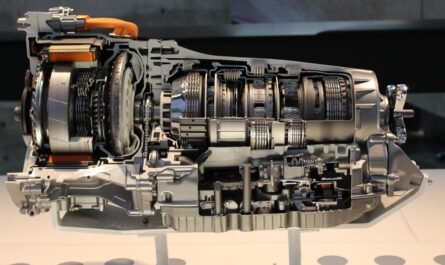
- Torque converter automatic. The traditional design, using a fluid coupling and planetary gearsets with hydraulically operated clutch packs.
- Automated manual (AMT). Essentially a manual gearbox with actuators operating the clutch and selectors. Common on vans. Shift quality is characteristically less smooth, and a pause between gears is normal rather than a fault.
- Dual clutch (DCT). Two clutches allowing pre-selection of the next gear. Smoother than an AMT, more complex, and clutch and mechatronic faults are the common failure areas.
Owners of automated manuals often report a fault that is simply how the transmission behaves. If yours has always paused between shifts, that is normal for the type.
Safety notes
Allow the engine to cool before working near the exhaust, turbo or manifold, as these retain heat long after the engine is switched off. Never work under a van supported only by a jack; use rated axle stands on firm level ground with the wheels chocked.
Keep hands, tools and loose clothing clear of belts, pulleys and cooling fans whenever the engine may run. A cooling fan can start without warning.
Symptoms and what they suggest
- Harsh or jerky shifts that have got worse over time. Frequently fluid condition, sometimes solenoid or clutch pack wear.
- Slipping, where engine revs rise without corresponding acceleration. Serious, and usually clutch pack wear or low fluid.
- Delayed engagement when selecting drive or reverse. Often low or degraded fluid.
- Limp mode, where the transmission locks into one gear to protect itself.
- Shuddering at low speed, commonly torque converter lock-up clutch judder, often fluid related.
- Whining or humming that changes with road speed.
- Warning light or transmission fault message.
- Burning smell, which indicates overheating fluid and is serious.
Fluid is the first thing to check
Healthy automatic transmission fluid is typically red or amber and reasonably clear. As it degrades it darkens towards brown, and burnt fluid is dark and smells acrid.
Dark, burnt-smelling fluid tells you the transmission has been running hot and that the friction material in the clutch packs has been degrading. It is a meaningful diagnostic finding rather than a cosmetic one.
Checking the level is more complicated than on a manual. Many modern van automatics have no dipstick and require the fluid to be checked at a specific temperature, with the engine running, on a level surface, through a level plug. Getting this wrong gives a false reading, and both overfilling and underfilling cause problems. If your transmission has no dipstick, this is generally a job for a garage with the correct procedure.
The fluid change question
Many manufacturers describe automatic transmission fluid as filled for life. As with manual gearboxes, that means the design life under assumed conditions, not that the fluid does not degrade.
On a van that tows, carries heavy loads or does urban stop-start work, fluid runs hotter and degrades faster. A periodic fluid and filter change is widely regarded as sound preventive maintenance in those conditions, and is inexpensive relative to a rebuild.
One caveat that is worth stating honestly: there is a longstanding debate about changing fluid on a high-mileage transmission that is already slipping. The concern is that fresh fluid can change friction characteristics in a worn transmission and make symptoms more obvious. Opinions differ, and the more useful framing is that fluid changes are preventive maintenance done before problems appear, rather than a repair for a transmission that is already failing. If yours is already slipping, get it assessed rather than hoping a fluid change will fix it.
Use exactly the specified fluid. Automatic transmission fluids are not interchangeable, and the friction modifiers differ between specifications. Using the wrong fluid causes shift quality problems and can damage the transmission.
Diagnostic sequence
1. Read the codes
Check: Transmission control module codes, which usually need a tool that accesses that module rather than a basic engine reader.
Next action: Codes often identify a specific solenoid, speed sensor or clutch, which narrows things considerably.
2. Assess fluid condition and level
Check: Colour, smell and level using the correct procedure for your transmission.
Next action: Dark or burnt fluid is significant. Low fluid causes slipping and delayed engagement and points at a leak.
3. Look at live data
Check: Transmission fluid temperature, requested versus actual gear, and slip values where available.
Next action: Slip within a gear indicates clutch pack wear. A commanded gear the transmission cannot achieve points at solenoids or hydraulic pressure.
4. Check for leaks
Check: Pan gasket, cooler lines, seals.
Next action: Low fluid always has a cause. Topping up without finding the leak is temporary.
5. Check the cooler
Check: Many automatics use a fluid cooler, sometimes integrated with the radiator.
Next action: A blocked cooler causes overheating, which is what burns fluid and destroys clutch packs. Also check for cross-contamination between coolant and transmission fluid where they share a cooler, which appears as a pink milky mixture and is a serious finding.
6. Consider adaptation and software
Check: Many transmissions learn shift characteristics over time and may need adaptations reset after work, and some faults are resolved by software updates.
Next action: Worth asking about before authorising mechanical work, since an adaptation reset is far cheaper than a rebuild.
Limp mode
Limp mode locks the transmission into a single gear, often third, to allow limited driving without further damage. It is a protective measure and should be treated as an instruction to stop rather than a mode to drive home in from a distance.
Sometimes it clears after switching off and restarting, but a fault that triggered it will normally recur. Have the codes read rather than repeatedly clearing it.
Indicative UK costs
Broad context only. A fluid and filter change commonly runs into the low hundreds, more where the correct fluid is expensive or the procedure is involved. Solenoid or mechatronic unit work varies widely. A rebuild or exchange automatic transmission typically runs well into four figures. This spread is why preventive fluid changes and early diagnosis make financial sense. Get quotes.
Common mistakes
- Using the wrong fluid. Specifications are not interchangeable.
- Ignoring dark or burnt fluid. It is telling you something specific.
- Driving in limp mode. It exists to limit damage, not to get you home from far away.
- Topping up without finding the leak.
- Assuming a normal automated manual pause is a fault. Know what your type does normally.
- Expecting a fluid change to repair a slipping transmission. It is prevention, not cure.
- Overfilling. Causes aeration and overheating.
When to stop and get help
Stop driving and get help if the transmission is slipping badly, if there is a burning smell, if it has entered limp mode, or if you find pink milky fluid indicating coolant contamination. Continued driving in these conditions escalates the damage quickly. Automatic transmissions are specialist work and are not a reasonable DIY repair.
Prevention
Consider periodic fluid and filter changes on a working van, particularly if it tows or carries heavy loads. Allow the transmission to warm before heavy loads. Come to a complete stop before shifting between drive and reverse. Do not hold the van on a slope using the transmission instead of the brake. Address leaks and cooling faults promptly, since heat is what destroys these units.
Frequently asked questions
Should I change the fluid if it is described as filled for life?
On a hard-working van, many specialists advise doing so periodically as prevention. Do it before problems appear rather than after.
My van pauses between gears. Is it faulty?
If it is an automated manual, a pause during shifts is characteristic of the type rather than a fault. If the behaviour has changed, that is different.
Can I drive in limp mode?
Only far enough to get somewhere safe. It is protecting the transmission from further damage.
What does pink milky fluid mean?
Coolant and transmission fluid have mixed, usually through a failed cooler. Stop driving and get it assessed, as this damages the transmission quickly.
This guide is general information for UK van owners, not vehicle-specific repair instructions. Procedures, tolerances and component layouts vary by engine code and model year. Confirm any figures against your VIN and manufacturer workshop information, and see our Disclaimer before carrying out any work.