
 by
Servicing gets treated as a box to tick, which is a shame, because on a working van it is the main thing standing between routine cost and expensive failure. Most of the faults covered elsewhere on this site trace back to a maintenance item that was stretched.
The severe usage question
This is the single most useful thing for a van owner to understand, and most never encounter it.
Manufacturers typically publish two schedules: a normal one and a severe or arduous usage one with shorter intervals. Severe usage conditions usually include frequent short journeys, extensive stop-start driving, operating consistently at high load, towing, extended idling, and dusty or dirty environments.
Look at that list from the perspective of a multi-drop delivery van, a site van or a courier. Most working vans meet several of those conditions every day, which means the normal schedule is the wrong one for them.
If your van does urban stop-start work while loaded, assume you are on the severe schedule unless you have specific reason to think otherwise. Check your handbook for the actual intervals, since they vary by engine and model year.
Safety notes
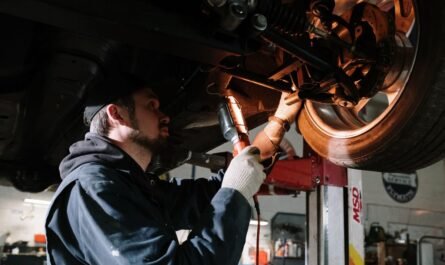
Allow the engine to cool before working near the exhaust, turbo or manifold, as these retain heat long after the engine is switched off. Never work under a van supported only by a jack; use rated axle stands on firm level ground with the wheels chocked.
Keep hands, tools and loose clothing clear of belts, pulleys and cooling fans whenever the engine may run. A cooling fan can start without warning.
Ranked by consequence
Not all service items carry the same risk if neglected. Roughly in order of what failure costs you:
1. Engine oil and filter
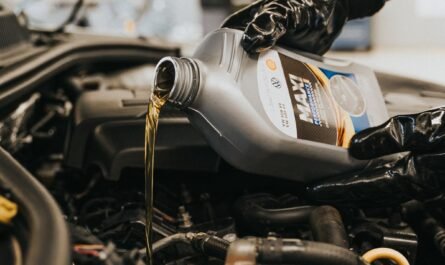
The highest-consequence routine item. Oil lubricates, cools, cleans and, on modern diesels, protects the turbo and the DPF. Degraded oil damages bearings and turbo bearings, and the wrong specification loads the DPF with ash prematurely.
On short-journey vans there is a further issue: fuel dilution from incomplete DPF regenerations thins the oil and reduces its protective ability, which is an argument for shorter intervals rather than longer. See engine oil specifications explained.
2. Fuel filter
Cheap component protecting the most expensive one. A neglected filter lets contamination reach the high-pressure pump, and the resulting failure can run into four figures. See fuel filters and water in diesel.
3. Timing belt where fitted
The highest-consequence item overall, though not an every-service one. Failure on an interference engine typically destroys the engine. Intervals are expressed in time as well as mileage, which catches out low-mileage vans. See timing belts and chains.
4. Brake fluid
Degrades on time regardless of mileage, and its deterioration corrodes the ABS unit from inside. See brake fluid on a van.
5. Coolant
The corrosion inhibitors deplete. Neglected coolant blocks heater matrices and radiators and wears water pump seals. See van coolant types.
6. Air filter
Modest consequence but cheap. Vans working in dusty environments need it more often than the schedule assumes.
7. Cabin filter
No mechanical consequence, but affects demisting and airflow, and is frequently forgotten entirely.
8. Gearbox oil
Often described as fill for life, which is worth questioning on a hard-working van. See gearbox oil on a van.
Weekly checks worth doing yourself
Five minutes, and they catch the majority of problems before they become breakdowns.
- Engine oil level on level ground. Watch for a level that is rising as well as falling, since that indicates fuel dilution.
- Coolant level when cold.
- All lights, which is the cheapest MOT preparation there is. See common van MOT failures.
- Tyre pressures and condition, adjusted for how the van is loaded. See reading uneven tyre wear.
- Washer fluid, and wiper condition.
- Any new noise, smell or warning light.
- Fuel consumption, since a sustained drop often signals a developing fault. See why your van fuel economy has dropped.
Monthly and seasonal
- Check under the van for fresh fluid drips.
- Look for coolant residue around hoses and housings.
- Drain the water separator on the fuel filter where fitted.
- Check brake fluid level and colour.
- Before winter, have the battery and charging system tested. See van winter preparation.
Dealer, independent or DIY
All three are legitimate, and the trade-offs are worth understanding rather than assuming.
Franchised dealer: manufacturer training, specific tooling, access to technical bulletins and software updates. Usually the most expensive, and worth it while the van is in warranty or for complex work.
Good independent garage: frequently better value, and a specialist who knows your particular van can be excellent. In the UK, servicing at an independent garage does not invalidate a manufacturer warranty provided the work is carried out to the manufacturer schedule using appropriate parts and fluids, and is properly documented.
DIY: viable for oil, filters and basic checks if you have the space and dispose of waste properly. Keep receipts for parts and record what you did and when, because undocumented DIY servicing significantly harms resale value.
Keep the record
Whoever does the work, document it. A van with a full, verifiable service history is worth meaningfully more than an identical one without, and the difference usually exceeds what the servicing cost. Keep invoices rather than relying on stamps alone, since invoices show what was actually done. See buying a used van for the buyer perspective on this.
Indicative UK costs
Broad context only. An interim service with oil and filter typically runs into the low hundreds at an independent garage, with a fuller service more. Dealer servicing is generally higher. Timing belts, brake fluid and coolant are usually separate items. Against that, the failures these intervals prevent commonly run into four figures. Get quotes and ask exactly what is included.
Common mistakes
- Using the normal schedule on a severe usage van. The most common and most consequential error.
- Stretching oil changes. Particularly damaging on short-journey diesels with fuel dilution.
- Skipping the fuel filter to save money. Protecting a component worth many times its price.
- Going by mileage only. Brake fluid, coolant and timing belts degrade on time.
- No documentation. Costs real money at resale.
- Ignoring advisories. They become failures.
- Assuming a service is an inspection. Ask specifically for a condition report if you want one.
When to get help
Have a garage look at anything involving brakes, steering, suspension or timing components if you are not equipped for it, and any warning light you cannot account for. Between services, do not wait for the next one if something has changed: a new noise or a warning light is worth investigating when it appears.
Frequently asked questions
Does servicing at an independent garage void my warranty?
Independent servicing does not automatically invalidate a manufacturer warranty. Check the specific warranty and coverage conditions, follow the correct schedule and specification, and keep itemised records. Damage caused by missed or incorrect maintenance can affect a claim.
How do I know if my van is severe usage?
Check the handbook definition. Frequent short journeys, stop-start work, heavy loads, towing and extended idling typically qualify, which covers most working vans.
Can I service it myself and keep the warranty?
Do not assume DIY maintenance meets every warranty or special-coverage condition. Ask the provider what records and professional servicing it requires before doing the work. Keep receipts, the specification used, the date and mileage; incorrect work can affect a related claim.
Is a full service history worth the extra cost?
On a van, usually yes. The resale difference commonly exceeds the servicing premium, and it reduces the risk of expensive failure.
This guide is general information for UK van owners, not vehicle-specific repair instructions. Procedures, tolerances and component layouts vary by engine code and model year. Confirm any figures against your VIN and manufacturer workshop information, and see our Disclaimer before carrying out any work.
Schedule and service-package guidance
For deciding what a garage service should include, use our service intervals, package and oil-specification guide. This article concentrates on the checks between those appointments.
For Ford vans, use Ford’s service and oil-change guidance and confirm the applicable schedule by VIN. Another manufacturer’s interval does not apply to your van merely because it uses the same oil viscosity.