 by
Steering complaints tend to be described vaguely, because the driver notices something has changed without being able to say what. Breaking the symptom down into pulling, wandering, play or knocking narrows the cause considerably, and each points at a different group of components.
What is in a van steering system
Most vans use rack and pinion steering with hydraulic or electric assistance. The rack connects through inner tie rods to outer track rod ends, which attach to the steering knuckles. Ball joints locate the knuckle to the suspension arms. Any of these wearing introduces play, and on a van they wear faster because the front axle carries a lot of weight.
Safety notes
Never work under a van supported only by a jack. Use axle stands rated for the weight at the manufacturer support points, on firm level ground, with the parking brake applied and the wheels chocked. Wear eye protection when working underneath, as corrosion debris falls.
Suspension components can store considerable energy. Coil springs in particular must never be disturbed without proper spring compressors, and even then the job carries real risk. If you are not equipped for it, this is a job for a garage.
Symptom groups
The van pulls to one side
Consistent pulling, requiring constant correction. Ordered from most to least likely:
- Unequal tyre pressures. Check this first, it costs nothing.
- Wheel alignment out of specification, usually after kerbing or a pothole.
- A binding brake on one side. Check for a hot wheel after a drive.
- Uneven tyre wear or mismatched tyres across the axle.
- Worn suspension components allowing geometry to shift under load.
- Tyre conicity, where a tyre pulls due to its internal construction. Swapping the front tyres side to side and seeing whether the pull follows is a useful test.
The van wanders and needs constant correction
Different from pulling, and more often wear-related. Look at worn track rod ends, worn ball joints, a worn steering rack, loose steering column joints, tired dampers, or excessive play in the rear suspension. On a leaf-sprung van, worn rear spring bushes genuinely affect straight-line stability. See leaf spring problems.
Free play at the steering wheel
The wheel moves an appreciable amount before the front wheels respond. Usually worn track rod ends or inner tie rods, a worn rack, or worn column universal joints.
Knocking over bumps
Commonly worn anti-roll bar drop links, which are among the most frequently replaced parts on a van and produce a knock disproportionate to their size. Also worn ball joints, worn top mounts, or loose damper mountings.
Heavy or inconsistent steering
On hydraulic systems, low fluid, a failing pump or a slipping drive belt. On electric systems, a fault in the assistance motor or its module, often with a warning light. Heaviness that comes and goes is worth investigating promptly.
Vibration through the wheel
Usually wheel balance if it occurs at a specific speed. If it appears only under braking, look at brake judder instead. See brake judder diagnosis.
Diagnostic sequence
1. Tyres and pressures first
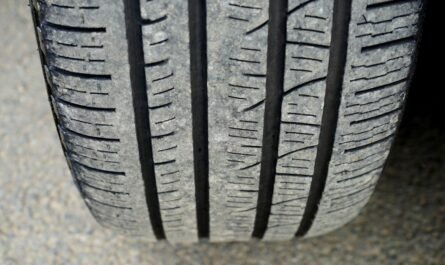
Check: Pressures cold against the placard, remembering vans have separate laden and unladen figures. Inspect tread depth and wear pattern across the width.
Next action: A remarkable proportion of steering complaints resolve here. See reading uneven tyre wear.
2. Check for play at the road wheel
Check: With the wheel raised, rock it at nine and three o clock, then at twelve and six.
Result and next action: Movement at nine and three points at steering components, typically track rod ends or the rack. Movement at twelve and six points at ball joints or the wheel bearing. This simple distinction saves a lot of time.
3. Have someone rock the steering while you watch
Check: With the van safely supported and someone gently rocking the steering wheel back and forth, watch each joint in turn.
Next action: You are looking for movement at a joint that is not immediately transmitted to the next component. This isolates the worn item precisely rather than by elimination.
4. Check drop links and anti-roll bar bushes
Check: Grip each drop link and try to move it. Look at the bar bushes for perishing.
Next action: Drop links are cheap and are the most common source of knocking over bumps. Check them before anything expensive.
5. Inspect gaiters and for leaks
Check: Steering rack gaiters for splits, and the rack and hoses for fluid leaks on hydraulic systems.
Next action: A split gaiter lets water and grit into the rack and is also an MOT item. Catching it early can save the rack.
6. Get the alignment measured
Check: A four-wheel alignment check.
Next action: Do this after replacing any steering or suspension component, not before. Aligning a van with worn joints is wasted money, because the geometry changes as soon as the worn part is replaced.
Indicative UK costs
Broad context only. Drop links are inexpensive and quick. Track rod ends are modest parts with alignment needed afterwards. Ball joints vary depending on whether they are replaceable separately or come as part of a complete arm. A steering rack is a substantially larger expense, and a reconditioned exchange unit is often the sensible route. Wheel alignment is typically a modest standalone charge. Get quotes.
Common mistakes
- Getting alignment done before replacing worn joints. The settings shift the moment the worn part is changed.
- Ignoring tyre pressures. The cheapest possible fix, frequently skipped.
- Replacing a rack when a track rod end was worn. Confirm which component has the play.
- Overlooking a binding brake as a cause of pulling. Check for a hot wheel.
- Ignoring a split rack gaiter. Cheap now, expensive once the rack is contaminated.
- Assuming knocking is serious. It is often a drop link costing very little.
When to stop and get help
Stop driving and get help if the steering feels loose or vague in a way that has come on suddenly, if you find significant play in a ball joint, if the steering becomes heavy without warning, or if you see a fluid leak from the rack. Steering is safety critical and worn ball joints in particular can separate. Get it inspected rather than continuing to drive.
Prevention
Avoid kerbing and take potholes slowly. Have the front end inspected at each service, since most of these components are visible on a ramp. Replace split gaiters immediately. Have alignment checked after any significant impact, and keep tyre pressures correct for how the van is loaded.
Frequently asked questions
How much steering play is acceptable?
Very little on a rack and pinion system. Any appreciable free movement at the wheel before the road wheels respond warrants investigation, and excessive play is an MOT failure.
Why does my van wander on the motorway?
Commonly worn track rod ends or ball joints, tired dampers, alignment out of specification, or on a leaf-sprung van, worn rear spring bushes.
Do I need alignment after replacing a track rod end?
Yes. Replacing it changes the toe setting, and driving without realignment wears tyres quickly.
Is knocking over bumps expensive to fix?
Often not. Anti-roll bar drop links are among the cheapest parts on the van and are the usual culprit.
This guide is general information for UK van owners, not vehicle-specific repair instructions. Procedures, tolerances and component layouts vary by engine code and model year. Confirm any figures against your VIN and manufacturer workshop information, and see our Disclaimer before carrying out any work.