 by
Fuel is one of the largest running costs on a working van, so a drop in economy is worth investigating. It is also one of the easiest things to misread, because perception is unreliable and the causes range from a genuine fault to simply having carried more weight this month than last.
First, measure it properly
Trip computer figures are useful for trends but are not always accurate in absolute terms, and they reset in ways that flatter or penalise particular journeys.
The reliable method is brim to brim. Fill the tank to the point where the pump cuts off, note the mileage, drive normally for a decent distance, then refill to the same point at the same pump if possible. Divide the miles covered by the litres added, then multiply by 4.546 to get miles per gallon.
Do this over at least a couple of tanks. A single tank measured over an atypical week tells you very little, and comparing a winter tank of urban multi-drop work against a summer tank of motorway running will show a large difference with nothing wrong at all.
Rule out the obvious first
These account for a great many complaints and cost nothing to check.
- Tyre pressures. Under-inflation increases rolling resistance measurably. Check cold, against the correct laden or unladen figures. See reading uneven tyre wear.
- Weight. A van carrying a full load of tools and stock all week uses noticeably more fuel than an empty one. Ask honestly whether the load has changed.
- Roof racks and external fittings. Aerodynamic drag on a tall van is significant, and a roof rack left on permanently costs fuel every mile.
- Season. Winter economy is genuinely worse: denser air, longer warm-up, more electrical load, winter fuel blends and more idling.
- Journey mix. More short cold journeys means worse economy regardless of vehicle condition.
- Driving style. Harder acceleration and higher motorway speeds cost more than most drivers assume, particularly on a high-sided vehicle.
Safety notes
Allow the engine to cool before working near the exhaust, turbo or manifold, as these retain heat long after the engine is switched off. Never work under a van supported only by a jack; use rated axle stands on firm level ground with the wheels chocked.
Keep hands, tools and loose clothing clear of belts, pulleys and cooling fans whenever the engine may run. A cooling fan can start without warning.
Mechanical causes, roughly in order of likelihood
Blocked or partially blocked DPF
A restricted filter increases back pressure and triggers frequent regenerations, each of which injects extra fuel. A van doing repeated failed regenerations can lose economy noticeably. See why DPF regeneration fails on short journeys.
Sticking EGR valve
A valve stuck open disrupts the air-fuel mixture and hurts both economy and driveability. See EGR valve faults.
Thermostat stuck open
A frequently missed cause. The engine never reaches proper operating temperature, so the control unit runs a richer mixture for longer, economy falls and the heater is poor. A van that takes an unusually long time to warm up, or whose gauge sits below normal, is worth investigating. See thermostat and water pump diagnosis.
Dragging brakes
A seized caliper or binding parking brake cable makes the engine work against the brakes continuously. Check for a hot wheel after a drive. See handbrake faults.
Worn or dirty injectors
Poor atomisation means incomplete combustion and wasted fuel, usually alongside rough running and smoke. See diesel injector problems.
Air filter and intake restriction
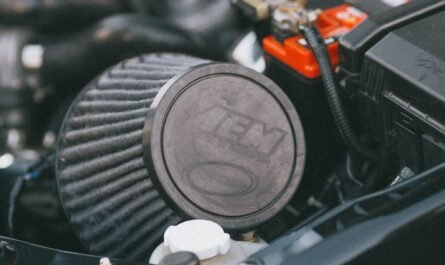
A heavily blocked air filter restricts airflow. Less dramatic than commonly believed on a modern engine, but a filter that has never been changed is worth attention.
Boost leaks
A split intake hose or loose clamp means the engine does not get the air it expects, so it works harder for the same output. Often accompanied by reduced power. See turbo failure symptoms.
Sensor faults
Mass airflow, coolant temperature and boost pressure sensors all feed fuelling decisions. A sensor reading slightly wrong, without triggering a warning light, can cost economy quietly. This is where live data is more useful than fault codes.
Wheel alignment
Significantly out of specification increases rolling resistance and wears tyres. Usually accompanied by uneven tyre wear.
Diagnostic sequence
- Measure brim to brim over two tanks, so you know whether there is genuinely a problem.
- Check tyre pressures and remove unnecessary weight and roof fittings.
- Read fault codes and, more importantly, live data. Look at coolant temperature reaching normal, DPF soot loading and regeneration frequency, and boost actual against requested.
- Check for dragging brakes by feeling wheel temperatures after a drive.
- Confirm the engine reaches operating temperature in a reasonable time.
- Investigate specific faults the data points to, rather than replacing parts speculatively.
Indicative UK costs
Broad context only. Checking pressures and removing a roof rack cost nothing. An air filter is inexpensive. A thermostat is usually a modest part with variable labour. DPF, EGR and injector work is covered in their own guides and ranges from modest to substantial. A diagnostic session to read live data is usually worth paying for before replacing anything. Get quotes.
Common mistakes
- Trusting the trip computer alone. Measure brim to brim before concluding anything.
- Comparing different seasons or journey types. Not a like for like comparison.
- Ignoring load and roof racks. Frequently the entire explanation.
- Buying fuel additives as a first step. They do not fix mechanical faults.
- Assuming no warning light means no fault. Sensors reading slightly wrong often log nothing.
- Overlooking a dragging brake. Costs fuel continuously and damages components.
When to get help
Get a diagnostic session if economy has dropped significantly and the simple checks have not explained it, particularly if it is accompanied by reduced power, smoke, a warning light or a van that will not reach normal operating temperature. Live data will identify most of these causes far faster than replacing parts one at a time.
Prevention
Keep tyre pressures correct for the load. Remove roof racks and unnecessary weight when not needed. Service on schedule, particularly air and fuel filters. Build in longer runs so the DPF regenerates properly. Address warning lights promptly. Drive smoothly and remember that on a high-sided van, motorway speed has a disproportionate effect on consumption.
Frequently asked questions
How much worse should winter economy be?
Noticeably worse is normal, from longer warm-up, denser air, more electrical load and more idling. A modest seasonal drop is expected; a large sustained drop is worth investigating.
Do fuel additives improve economy?
Cleaning additives may help where deposits are genuinely affecting injector spray, but they will not compensate for a mechanical fault, a dragging brake or a blocked DPF.
Does a roof rack really matter?
On a tall van at motorway speed, aerodynamic drag is a meaningful share of fuel use. Removing a rack you are not using is one of the easier savings available.
Could a sensor fault cause this without a warning light?
Yes. A sensor reading plausibly but incorrectly often does not set a code, which is why live data matters more than a code read here.
This guide is general information for UK van owners, not vehicle-specific repair instructions. Procedures, tolerances and component layouts vary by engine code and model year. Confirm any figures against your VIN and manufacturer workshop information, and see our Disclaimer before carrying out any work.